Top 10 UGC Hooks That Stop the Scroll in the First Two Seconds
Ten UGC hook formats to brief creators on, from problem statements to comment replies, with how to test them and keep each one compliant in Taiwan.

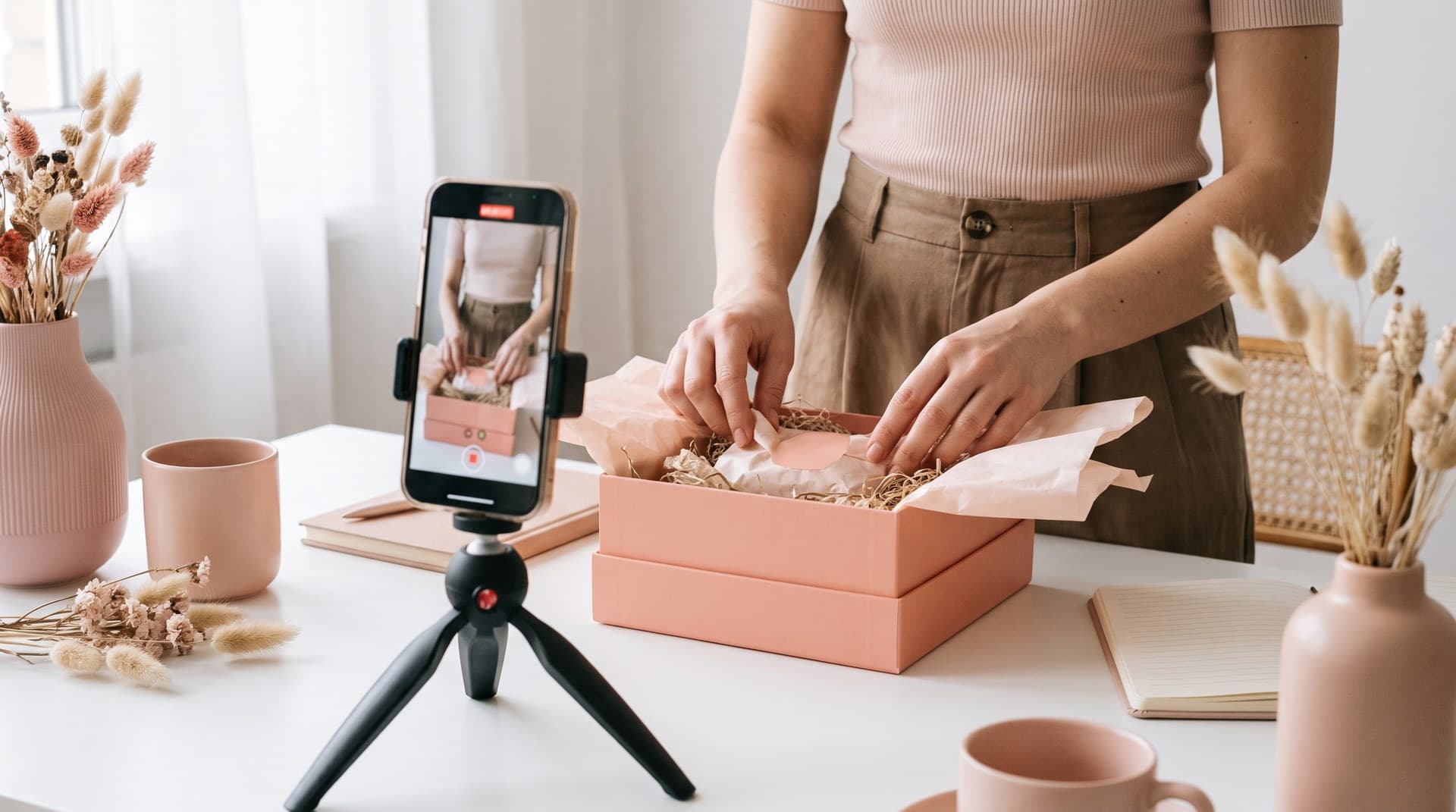
A UGC hook is the first line, image or action in a video, and it earns the next ten seconds of attention or loses them. The ten formats below are what to put in a creator brief so each video arrives with several openings to test, instead of one opening you hope will work.
Why the hook is the part to brief
Creative fatigue now moves in days. Motion's 2026 benchmark of more than 550,000 Meta ads found roughly half of creatives are turned off before day 28 (Motion, 2026), and Marpipe reports TikTok and Instagram Stories placements saturate in 7-10 days (Marpipe via Influee, 2025). Both are vendor datasets, but they agree with what most media buyers see.
If the audience is tired of an ad, what they are tired of is mostly its opening. The body, which holds the demo, proof and call to action, can stay the same across many versions. That is why mass UGC works against creative fatigue: a bench of creators can each film the same body with different openings, and the account gets far more distinct ads for the same shoot cost.
Creator-led ads also start from a stronger place. TikTok's own analysis reports 70% higher CTR and 159% higher engagement rate for creator ads than non-creator ads at the same CPM (TikTok for Business, 2025). That is platform-owned data, so read it as a direction, not a guarantee. A good hook is what turns that head start into a view.
1. The problem statement
Open on the annoyance your product removes, said the way a customer would say it. "My sunscreen leaves a white cast on every photo" is better than "Introducing a lightweight sunscreen". The viewer who has that problem stops, and the viewer who does not scrolls, which is fine.
Brief the creator to name the problem in their own words and to keep it under ten words. Ask for the real problem, not a marketing paraphrase of it.
2. The result first
Show the outcome in the first frame, then rewind. A finished desk setup, a clean stovetop, a skin close-up. The viewer wants to know how it got there, so they stay for the body.
The rule for this hook is honesty. The result on screen must be one the product can produce under normal use. If lighting, filters or editing helped, the brief should say that is not allowed. In Taiwan, a result that overstates the product is a problem for the advertiser as well as the creator, as covered in the disclosure rules guide.
3. The myth bust
"You do not need a 10-step routine." "Cheap rice cookers are not the problem." Open on a belief the viewer holds and contradict it. The tension makes people wait for the explanation.
Keep the myth real. A myth that nobody believes reads as a setup, and a correction that the brand cannot support with a fact is a claim you will have to defend. Give the creator the approved claims list and let them pick the myth from it.
4. The question the viewer answers in their head
"Why does my phone die at 3 p.m.?" "Which of these is the real one?" A good question is specific enough that the viewer starts answering it before the line ends. Vague questions such as "Want better skin?" get a shrug.
This format suits products with an obvious comparison or a hidden detail. It works well with a split screen or two objects held up in front of the camera.
5. The specific number
A concrete figure in the opening gives the brain something to check. "I spent three weeks and NT$600 on this" or "Four ingredients, ten minutes". The number should be the creator's own, from their own use, not a statistic the brand wants to push.
Do not let a hook borrow an outside statistic unless you can link the source. If a creator wants to say "most people", ask them to say "I" instead. That is both truer and more believable. For tracking which numbers earn their place, see how to measure UGC ROI.
6. The switch story
"I stopped using my old blender after two months of this one." A switch story carries a comparison, a reason and a personal stake in under five seconds. It is one of the most natural openings for a real customer, because most people have switched something.
Brief the creator not to name or disparage another brand. Say what they changed, not what they dropped. This keeps the post accurate and avoids a comparison claim you cannot support.
7. The mid-action open
Start in the middle of something: mid-pour, mid-unboxing, mid-sentence. There is no greeting and no logo. The video feels like it was already going, so the viewer joins it instead of deciding whether to.
This is the easiest hook for a first-time creator, because it asks for less performance. Ask for the first take to start already moving, and cut anything before the first real action.
8. The text-first open
Many people watch with the sound off, so the first thing they read should carry the hook. Put the line on screen in the first frame, large and short, and let the creator say it aloud too. The text and the voice should match, so a viewer with sound on does not get a different message.
Check legibility on a phone. Text must sit clear of the interface elements at the bottom and the right edge, which differ between TikTok, Reels and Shorts. A caption the interface covers is a hook nobody read.
9. The local context open
A hook that sounds like Taiwan lands harder in Taiwan than one translated from somewhere else. A convenience store run, a rainy scooter commute, a night market snack, the way people mix Mandarin with Taiwanese phrases when they are relaxed. These details tell the viewer the video was made by someone like them.
This is where creator choice matters. A creator from Kaohsiung and one from Taipei do not sound the same, and neither sounds like a script. Social reach in Taiwan is broad, with 18.1 million social media user identities and TikTok at 8.67 million adults as of October 2025 (DataReportal, 2026), so the bench can cover several voices. The trade-offs by creator size are in micro vs macro influencers.
10. The comment reply
"Replying to a comment" turns one viewer's question into the hook for everyone. It brings social proof with it, because someone already asked, and it gives you a source of hooks that costs nothing: your own comment section and your creators' comment sections.
Mine comments for repeated questions, doubts and objections, then hand the best ones to creators as hook prompts. The format also suits older posts: a post that has stopped performing can be given a second life by answering the comment that came in last week.
Keep a running hook log: the line, the format number from this list, the creator, the platform and the result. After a month you will know which formats suit your product, which is more useful than any general ranking.
How to test hooks without fooling yourself
Test one variable at a time. Keep the body, the creator, the audience and the budget the same, change only the opening, and give each version enough delivery to be judged. A hook that wins because it was shown to a warmer audience has not won.
Read the metrics in the order the viewer experiences them. Hold rate, meaning how many viewers pass the first few seconds, tells you if the hook worked. Click-through and cost per result tell you if the body worked. A hook with strong hold and weak conversion is a body problem, not a hook problem. Cadence matters too: AdMove and Motion suggest 3-5 new variants per ad group per week to stay ahead of fatigue (AdMove, 2025). That is a vendor recommendation, so calibrate it against your own decay curve.
If you run creator posts as ads, the hook is what the audience sees under a creator handle. The mechanics of that are in Spark Ads vs Partnership Ads.
Keep every hook briefable and compliant
A hook is the most quoted line in the post, so it is the line most likely to be screenshotted if something is wrong. Three checks before a hook goes into a brief:
- Is it true? The creator should be able to say it from their own use or from the approved claims list.
- Is it disclosed? A commercial relationship has to be visible. Taiwan's Fair Trade Commission expects endorsers with a non-obvious interest relationship to disclose it, and advertisers carry liability under the Fair Trade Act (Taiwan FTC guidance).
- Is it free enough? Give the creator the idea and the limits, not a script. Over-scripted hooks sound like ads, and the common ways briefs go wrong are in 10 UGC brief mistakes.
Putting hooks into a managed creator program
The list above is useful only if hooks actually reach creators in a form they can shoot. That means a brief with one body and a menu of openings, a way to collect the files, a check against the claims list and a log that ties each hook to its result. At the scale of dozens of creators, that is a workflow problem, not a creative one.
Posty handles the sourcing, briefs, contracts, disclosure and tracking for brands that run campaigns with many small creators in Taiwan and across Asia, so the hook menu goes out to the whole bench at once and results come back by hook. If you are planning a campaign, start by picking three hooks from this list and one body, and compare them against your current best ad.
Frequently asked questions
- What is a hook in a UGC video?
- A hook is the opening line, image or action that makes a viewer stop scrolling and keep watching. In short-form video it is usually the first one to three seconds, and it is the part of the ad you can change most cheaply while keeping the rest of the video the same.
- How long should a UGC hook be?
- Aim for two to three seconds of spoken line or on-screen action, then move straight into the body. A hook that needs a long setup is really a second scene. If you cannot say it in one breath, cut it.
- How many hooks should I test per UGC video?
- Brief three to five hooks per body. Platform guidance on creative diversity and vendor benchmarks on fatigue both point toward more distinct variants rather than one polished cut, and a hook swap is the cheapest way to produce them.
- What is the best hook for TikTok and Reels ads?
- There is no single winner, and any list that names one is guessing. Problem statements, result-first openings and comment replies are common starting points, but the right hook depends on the product, the creator and the audience, so test several against the same body.
- Do UGC hooks need an ad disclosure?
- Yes, if the creator has a commercial relationship with the brand. The hook is part of the content, so a claim in it must be true and the disclosure must be visible somewhere the viewer will actually see it. Taiwan's Fair Trade Commission expects endorsers to disclose interest relationships.
- UGC hooks
- short-form video
- creator briefs
- TikTok ads
- Reels