Top 7 Ways to Use UGC in a Product Launch
Seven ways to use creator UGC across a launch, from embargoed seeding at T-4 weeks to always-on refresh at T+4, with what to brief, when to post, and what signal to watch.
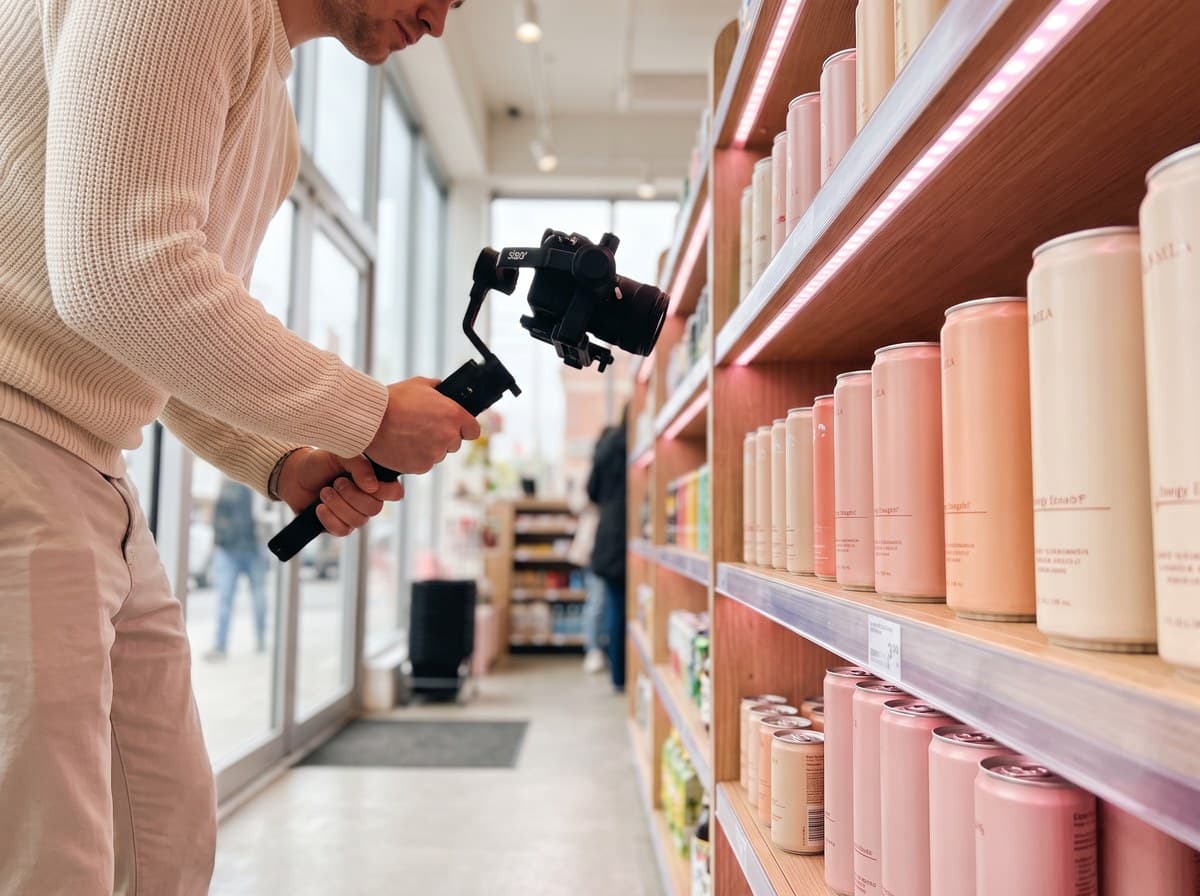
The best way to use UGC in a product launch is to spread it across the whole launch window rather than dumping it on launch day. Seed creators under embargo four weeks out, release a burst of posts from many small accounts on launch day, put paid budget behind the best posts within 72 hours, seed reviews where Taiwanese shoppers actually look, tie into live commerce, recruit early buyers as a second wave, and keep a smaller always-on batch running afterward. Each stage feeds the next.
The reason to lean on creators rather than a hero ad is trust. Edelman's 2025 research found 60% of consumers trust what a creator says about a brand more than what the brand says about itself (Edelman, 2025). A launch is the moment a product has zero track record. We covered the mechanics in 7 ways UGC builds brand trust; this article is about the calendar.
Launch calendar at a glance
| Week | Stage | What creators do | Signal to watch |
|---|---|---|---|
| T-4 | Seeding | Receive product, sign contract, read brief | Acceptance rate, sample delivery confirmations |
| T-3 | Seeding | Use the product, shoot raw footage | Draft submission rate |
| T-2 | Teaser | Post embargoed teasers with no product name or price | Saves and comment questions on teasers |
| T-1 | Teaser | Final drafts approved, disclosure checked | Approval turnaround, revision count |
| T0 | Launch burst | Posts go live across all accounts in a 48-hour window | Distinct accounts live, hashtag or link volume |
| T+1 | Whitelisting | Top posts run as partnership ads and Spark Ads | CPA and CTR vs your brand-handle ads |
| T+2 | Reviews and live | Product-page reviews, Dcard and PTT threads, live commerce tie-in | Review count, forum thread replies, live viewers |
| T+3 | Second wave | Early buyers invited to post | Buyer-to-creator conversion rate |
| T+4 onward | Always-on | Monthly batch of new creators | Ad frequency, creative age, CPA drift |
1. Pre-launch seeding and teaser content under embargo
Start four weeks out. A creator who has used a skincare product for two weeks talks about it differently from one who opened the box that morning, and audiences can tell.
What to brief. Two parts. The product: the one thing it does differently, two or three use moments to show, the claims creators can and cannot make. The teaser: what may be shown before launch (texture, packaging silhouette, a reaction) and what may not (product name, price, retail link). Put the embargo date and time in the contract, not in a chat message.
Timing. Ship samples at T-4. Ask for raw footage at T-3 so you know who is actually filming. Teasers go live at T-2 and T-1, staggered so the feed does not look coordinated.
Signal to watch. Saves and "what is this?" comments on teasers tell you the hook works before you have spent anything on media. Track draft submission rate too; if fewer than 70% of accepted creators have sent something by T-3, you have a sourcing problem, not a content problem.
Embargoed teasers are still paid endorsements. Taiwan's Fair Trade Commission requires endorsers with a non-obvious interest relationship with the advertiser to disclose it, and advertisers are liable under Articles 21 and 25 of the Fair Trade Act (公平交易委員會, 薦證廣告規範說明). "It's a teaser" is not an exemption. See our guide to influencer disclosure rules in Taiwan.
2. Launch-day volume burst across many small accounts
A shopper who sees a new product once from a celebrity has seen an ad. A shopper who sees it from four unrelated people in a week believes something is happening. Small accounts also carry more engagement per follower. HypeAuditor's 2025 dataset (vendor data) puts Instagram engagement at 6.23% for nano accounts against 1.2 to 1.8% for mega accounts (HypeAuditor, 2025). The full case is in 10 reasons 100 creators beat one hero ad.
What to brief. The same three facts for everyone (what it is, who it is for, where to buy), their own angle, one tracked link or code per creator, and a full post rather than a story so it lives on the profile.
Timing. A 48-hour window from launch, with posting slots staggered across the two days and across Instagram, Threads, Facebook, and TikTok depending on the age band you are after.
Signal to watch. Distinct accounts live within the window, not total reach. Sixty accounts each reaching 3,000 people is a stronger launch than one account reaching 180,000, because the first gets seen from several angles and the second gets seen once.
3. Whitelist the best posts as ads within 72 hours
By the end of launch day you know which five to ten posts are outperforming. Put budget behind them from the creator's own handle: a partnership ad on Meta, a Spark Ad on TikTok.
Meta reports that adding partnership ads to campaigns delivered 19% lower CPA and 13% higher CTR on average (Meta via Marketing Dive, 2025). TikTok reports Spark Ads from a creator account show 59% higher engagement than the same content from a brand account (TikTok for Business, 2025). Both are platform-owned figures, so treat them as directional.
What to brief. Whitelisting permission belongs in the original contract, with a defined term. Extended ad usage typically adds 30 to 50% to a creator's fee, and perpetual rights 100 to 150% (vendor pricing data from Influence4You, 2026). On Meta the creator must approve the brand in the Branded Content tool before the ad can run, so collect that approval during onboarding.
Timing. Within 72 hours of launch, while the organic signal is still fresh.
Signal to watch. CPA and CTR against your brand-handle ads on the same audience. If a whitelisted post is not beating the brand ad on both after three days, stop it and try the next one down the list.
4. Seed reviews on product pages and in Dcard and PTT
Videos open the door; reviews close the sale. Bazaarvoice's 2025 Shopper Experience Index (vendor research, 7,000 consumers in six countries) found 74% of shoppers trust UGC more than brand content on product pages and 55% are unlikely to buy without it (Bazaarvoice, 2025). For a new product, an empty review section is a warning sign.
In Taiwan the review surfaces are not only your own product page. i-Buzz Research (2024, vendor) reported that Dcard searches containing 推薦 or 評價 rose 59% year over year, with beauty, fashion, and food boards the most active (i-Buzz, 2024). PTT keeps broader influence with older audiences. A launch with no presence in either is invisible to a shopper doing due diligence.
What to brief. Ask the seeding creators who received the product first for an honest written review on your product page or retailer listing, plus a forum post where it fits their existing habits. Brief for specifics: how long they used it, what they compared it to, one thing they would change. Do not script the sentiment. Under the FTC's 2023 network advertising principles, advertisers must ensure creator content is truthful, and creators who knowingly participate in violations are liable jointly (公平交易委員會, 網路廣告案件處理原則).
Timing. T+1 to T+2, before the whitelisted ads start sending people to the page.
Signal to watch. Review count on the page and reply count in forum threads. Bazaarvoice's 2025 index, citing Columbia and Yale research, notes that products with both high ratings and high review volume get the strongest preference boost from AI shopping agents (Bazaarvoice, 2025). Volume matters as much as the average score.
5. Tie into live commerce on Shopee Live and LINE
The MIC live commerce consumer survey (April 2025) found 73% of Taiwanese online shoppers have watched live commerce, with Shopee Live at 62%, Facebook Live at 36%, and momo at 26%, and about half of viewing happening between 8 and 10pm (資策會 MIC via CNA, 2025).
A launch is a natural live moment, and the UGC you already have makes the stream better: launch-day clips run as teasers beforehand, and creator posts and early reviews go on screen as proof while the host demonstrates.
What to brief. Permission in the creator contract to reuse clips inside a stream and its replay, and a handful of your most articulate creators to co-host as guests under the same claims boundaries. Give the stream its own code to separate live-driven orders from ad-driven ones.
Timing. T+2, in the 8 to 10pm window, once reviews are on the page. Announce it in launch-day posts and through your LINE official account; LY Corporation reports 22 million monthly active users in Taiwan as of September 2025 (LY Corporation, 2025).
Signal to watch. Concurrent viewers and orders during the stream, then replay views over the following week. The full playbook is in live commerce in Taiwan: 6 ways UGC feeds Shopee Live, momo and LINE.
6. Turn early customers into a second UGC wave
Your first buyers are your cheapest and most credible creators. They paid for the product, and they usually have the small accounts that carry the engagement advantage described above.
What to brief. A post-purchase invitation seven to ten days after delivery, offering a modest reward (store credit, early access to the next drop, a feature on the brand account) for a post. Keep the ask small: a photo and two sentences is fine. Give them the same three facts and the same disclosure line as paid creators, because a reward creates an interest relationship.
Timing. T+3, late enough for buyers to have used the product and early enough that the launch is still fresh.
Signal to watch. Buyer-to-creator conversion rate, the share of invited customers who post. Even a few percent of a launch cohort produces dozens of new posts. Also watch which angles customers choose unprompted; that feeds the next brief.
7. Post-launch always-on refresh
Launch content wears out. Motion's 2026 creative benchmarks (vendor data across 550,000 ads) found roughly half of Meta creatives are turned off within 28 days, with a recommended refresh cadence of two to four weeks for prospecting (Motion via Social Operator, 2026). The whitelisted posts that worked in week one will not work in week six.
What to brief. A smaller monthly batch of new creators, briefed on the angles that won during the launch plus one or two new ones to test. Rotate audiences too: if launch skewed to 18 to 25, the month-two batch can lean to 30 to 40. The creative fatigue article covers cadence and variant math.
Timing. Begin recruiting at T+2 so the first refresh batch lands at T+4, right when launch creatives are aging out.
Signal to watch. Creative age and CPA drift on the launch winners. When CPA on a whitelisted post has risen 30% from its first-week level, retire it and move the budget to a fresh post.
Where launches go wrong
Most launch UGC programs fail on operations, not creative. Samples ship late, contracts omit whitelisting rights, and nobody checks disclosure until a post is live. Kolr's 2025 Taiwan report (vendor survey) found 28.1% of Taiwan marketers name effectiveness tracking as a top pain point and 27.4% name finding suitable creators (Kolr, 2025). Both problems compound in a launch, where you need many creators fast and need to know within days which posts to fund.
This is the work Posty does for brands and agencies in Taiwan. We source and contract the creators, handle briefs and disclosure review, run the launch calendar above as a managed campaign, pay everyone out, and put every post, review, and whitelisted ad into one dashboard so the launch team can see which stage is working while there is still time to act. If you are planning a launch next quarter, start seeding four weeks out, and read 10 UGC brief mistakes before the first sample ships.
Frequently asked questions
- How early should I start UGC for a product launch?
- Recruit creators and ship samples about four weeks before launch day. That leaves two weeks for creators to actually use the product and two weeks to review drafts, so posts go live on the day with real experience behind them instead of unboxing reactions.
- How many creators do I need for a launch campaign?
- For a consumer product in Taiwan, launch-day bursts usually run from several dozen to a few hundred small accounts. Volume matters more than any single follower count, because the goal is for a shopper to see the product from several unrelated people in the same week.
- What is whitelisting in UGC marketing?
- Whitelisting means running a creator's post as a paid ad from the creator's own handle, with their permission. On Meta these are called partnership ads and on TikTok Spark Ads. It lets you put budget behind the posts that already work organically.
- Should UGC for a launch mention that it is sponsored?
- Yes. Taiwan's Fair Trade Commission requires endorsers with a non-obvious interest relationship with the advertiser to disclose it, and the advertiser is liable under the Fair Trade Act. Bake the disclosure into the brief and check it before approval.
- How do I keep UGC going after the launch week?
- Turn early buyers into a second wave with a post-purchase invite, then keep a small monthly batch of new creators running. Ad creative wears out within weeks, so a steady trickle of fresh posts is what keeps launch performance from decaying.
- product launch
- UGC
- creator marketing
- whitelisting
- Taiwan